
We Care For Our Environment
What We Do
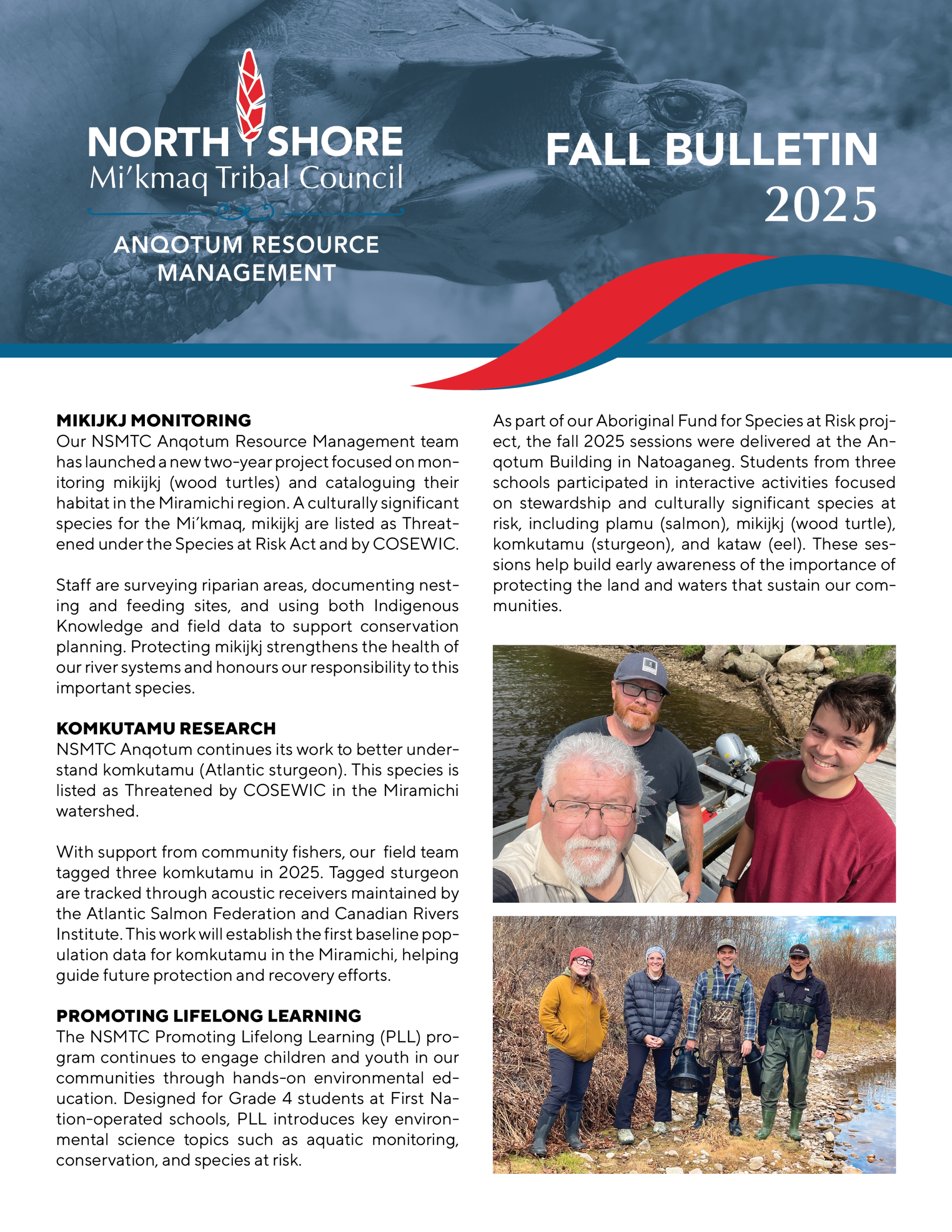
Our Work: In 2025, we began a two-year project to monitor new and known Wood Turtles (Mikijkj) and map their habitat in two of our member communities in the Miramichi. Mikijkj are culturally significant to Mi’kmaq and are listed as Threatened under Canada’s Species at Risk Act (SARA) and by the Committee on the Status of Endangered Wildlife in Canada (COSEWIC).
How it Helps: Gathering Indigenous Knowledge, along with surveys and monitoring, helps protect Mikijkj and supports long-term conservation planning.
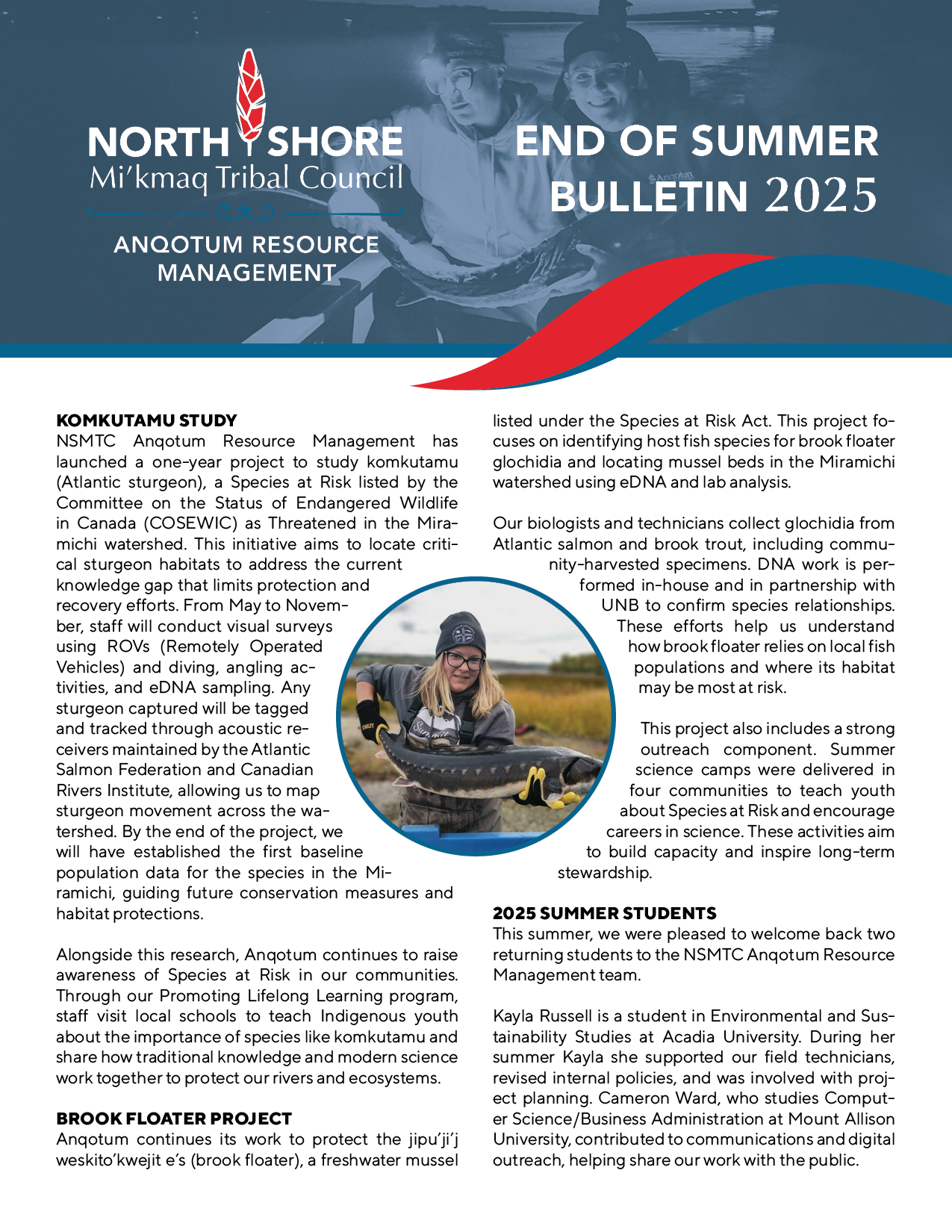
Our Work: We identify where Komkutamu (Atlantic Sturgeon), a Species at Risk listed as Threatened by COSEWIC, live within the Miramichi watershed. Our work includes locating sturgeon, tagging and tracking their movement, and gathering Indigenous Knowledge through community engagement to better understand how they use different habitats.
How it Helps: This work helps guide protection efforts and supports the recovery of the species. It also builds awareness of Species at Risk, especially among youth.
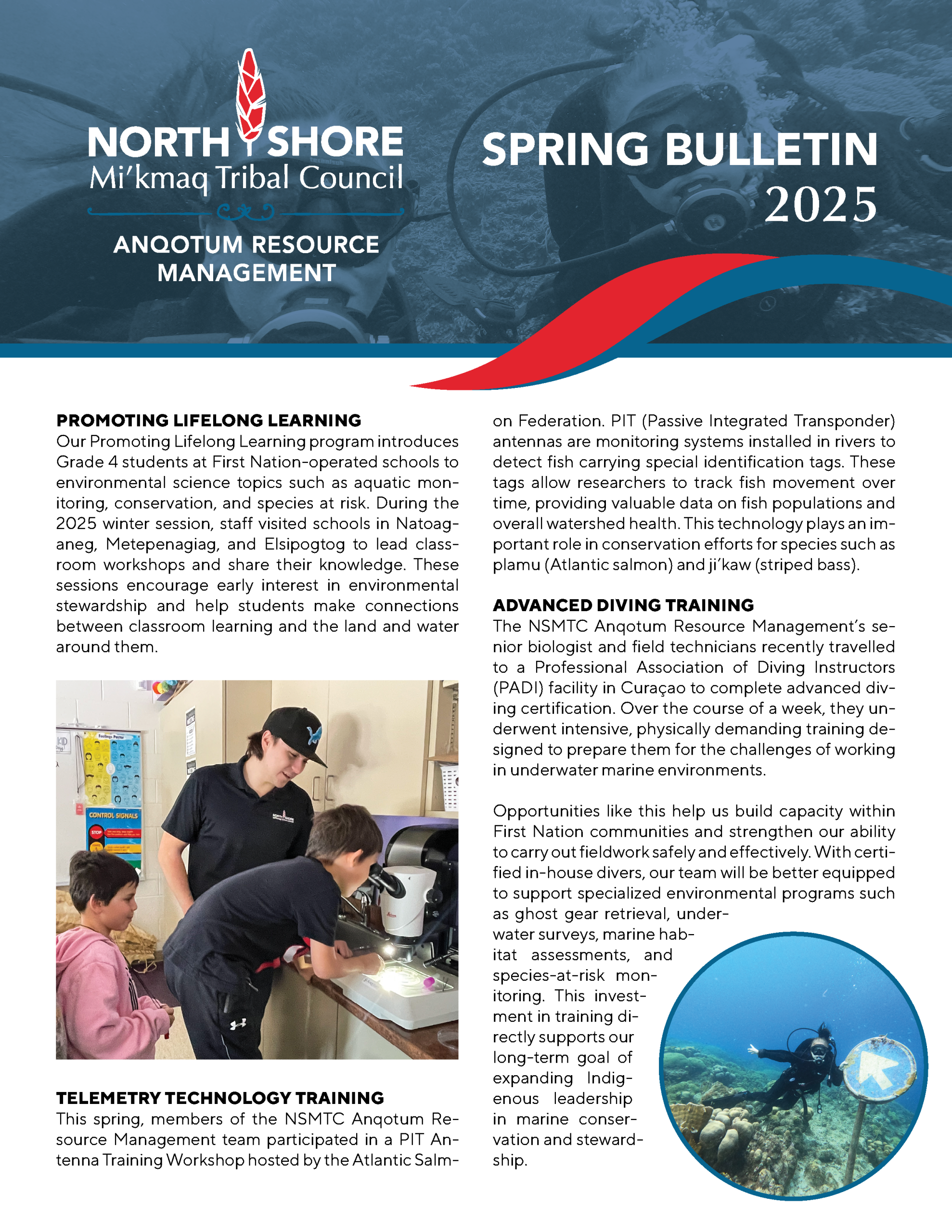
Our Work: Twice per year, we host indoor and outdoor workshops for Grade 4 students in First Nations–operated schools. These workshops focus on culturally specific Species at Risk, including wood turtles, Atlantic sturgeon, American eel, Atlantic salmon, and brook floater, and include input from community elders and holders of traditional knowledge.
How it Helps: This work teaches youth about monitoring aquatic resources and fosters community stewardship.
Our Work: Nkat’law (Brook Floater) is listed under the Species at Risk Act and has an existing management plan. We identify key host species for glochidia and increase community awareness of Species at Risk, with a focus on youth who will carry conservation efforts forward.
How it Helps: This work helps address knowledge gaps, including identifying new Nkat’law sites and improving understanding of the species’ biology.
Our Work: Each year, we host children and youth in our communities for a one-day summer science camp. We organize activities and games that teach participants about the environment and Species at Risk.
How it Helps: Along with engaging youth, this work supports capacity-building at the community level.
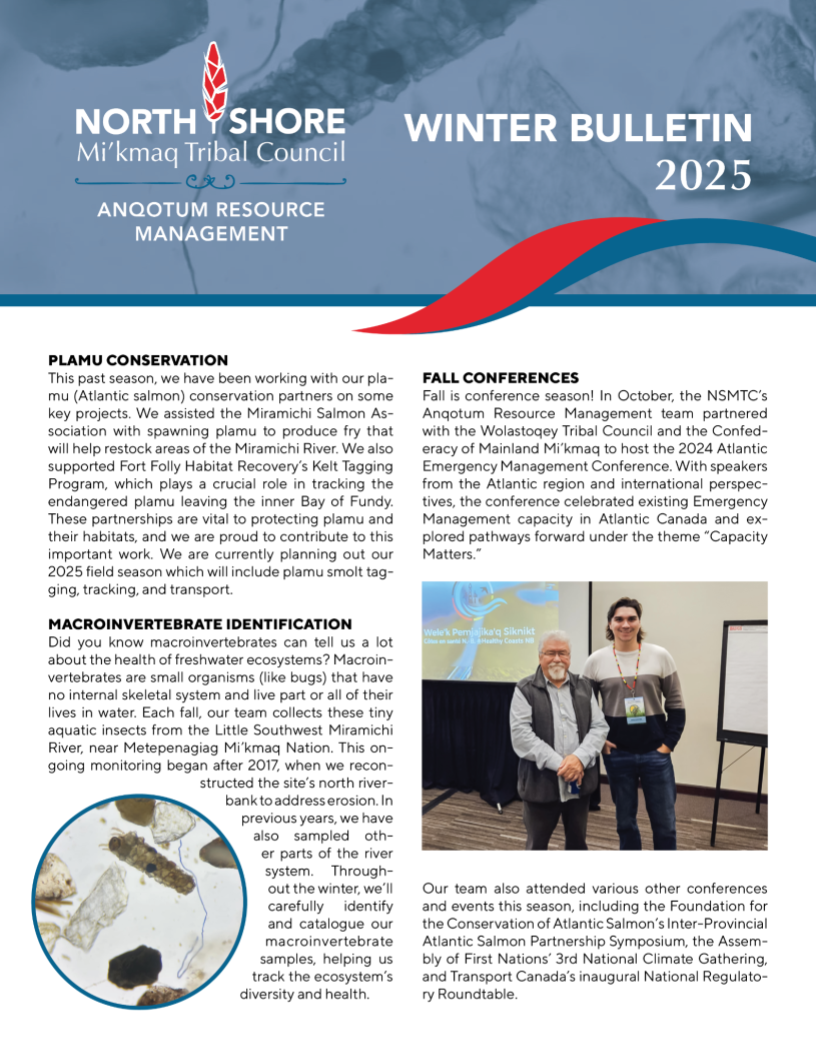
Our Work: We support Plamu (Atlantic salmon research led by partner organizations on the northwest branch of the Miramichi River. This work includes helping to collect, count, tag, and release juvenile salmon.
How it Helps: The research provides valuable insight into Atlantic salmon population trends.
Our Work: We support the Canadian Coast Guard through Indigenous recruitment, safety and rescue training, oil spill response training, and the identification of derelict vessels within First Nations community territory. We also host special training sessions with fishers from our communities.
How it Helps: The Canadian Coast Guard works to ensure the safety of mariners and protect the marine environment.
Our Work: With the support of conservation partners, we study marine sediment and aquatic organisms in Black’s Harbour, Marsh Creek, and the Little River Estuary to understand how industrial development affects coastal ecosystems. By using isotopic analysis, we can see how energy and nutrients move between organisms and build a clearer picture of local food webs. We compare this information with data from the Musquash Marine Protected Area.
How it Helps: This work helps show how industrial development affects coastal ecosystems and provides information that can be used to protect marine life.
Our Work: We work alongside partners and communities across the Gulf of Saint Lawrence coastal region of New Brunswick to identify, understand, and address environmental concerns that affect biodiversity, ecosystem health, and community well-being.
How it Helps: This project demonstrates the value of two-eyed seeing and community collaboration while helping to conserve species at risk.
Our Work: Plamu First is a coordinated response to the sharp decline of Atlantic salmon (Plamu) in the Miramichi watershed, driven by predation and climate change. In 2021, we hosted the Plamu First conference to bring together Indigenous leadership and watershed conservation partners to address the Plamu crisis and develop a shared path forward. In 2024, we convened partners again to assess progress and update the strategy. This work resulted in the Plamu First Five-Year Strategic Plan (2025–2030).
How it Helps: The strategy calls for long-term federal support and shared decision-making to prevent the collapse of a species that is ecologically and culturally vital to the Miramichi.
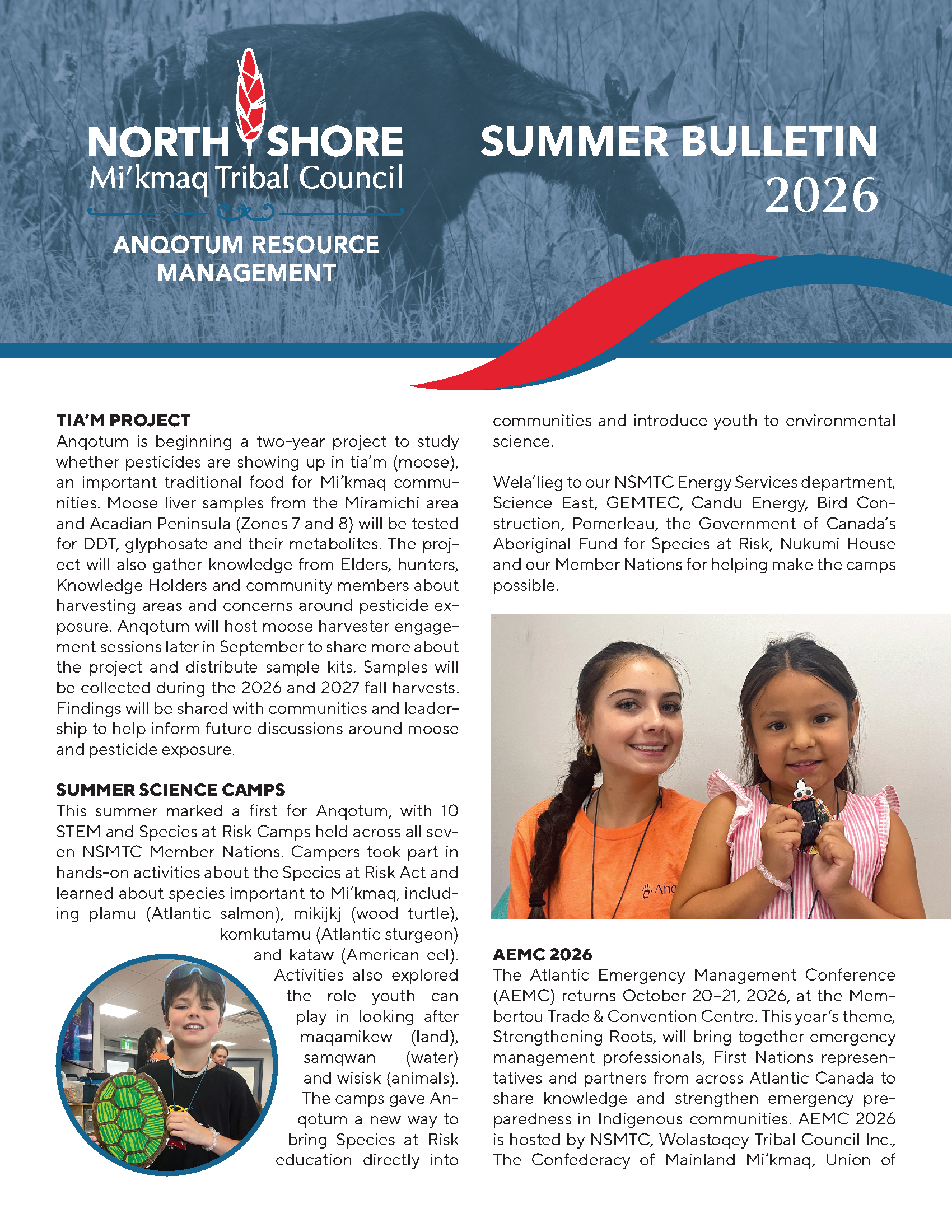
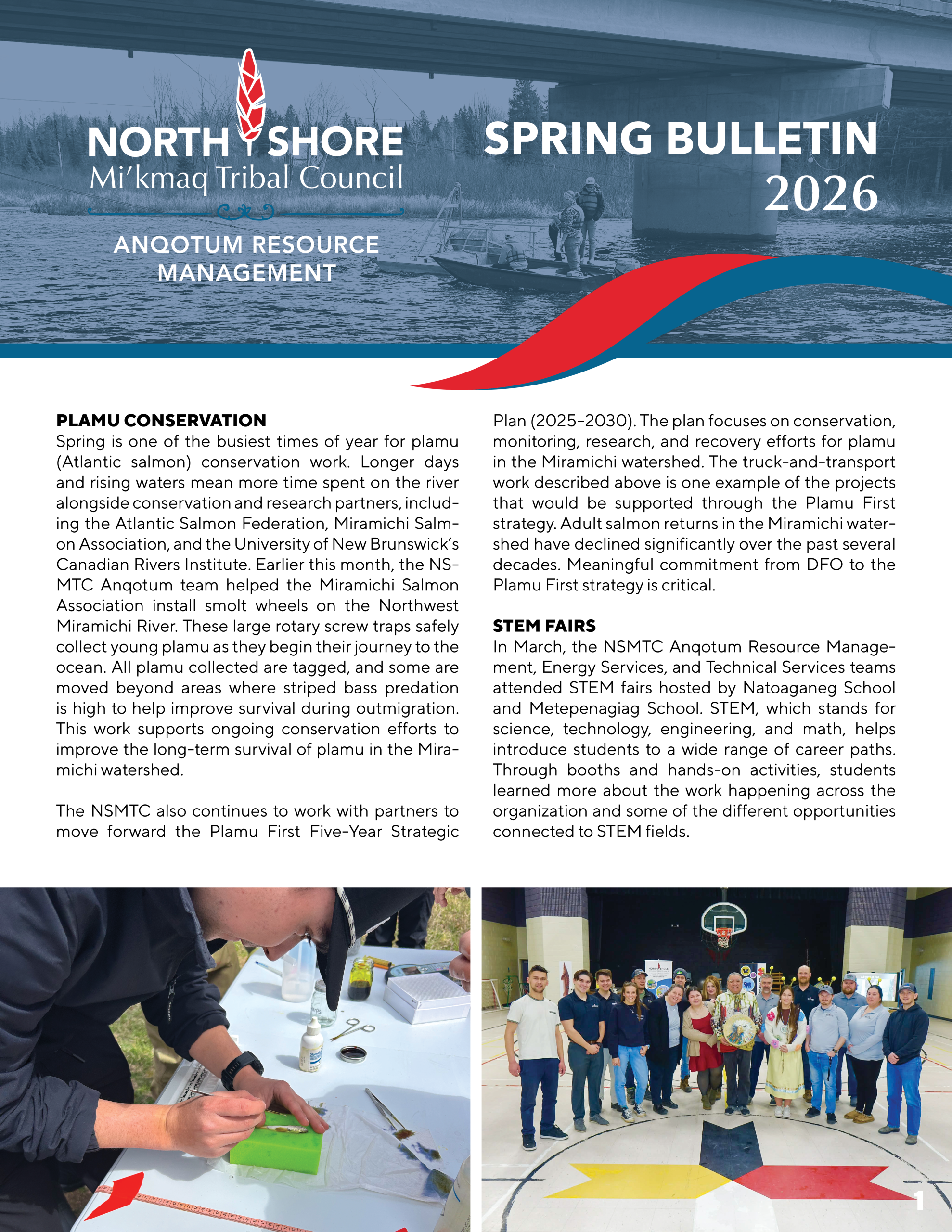
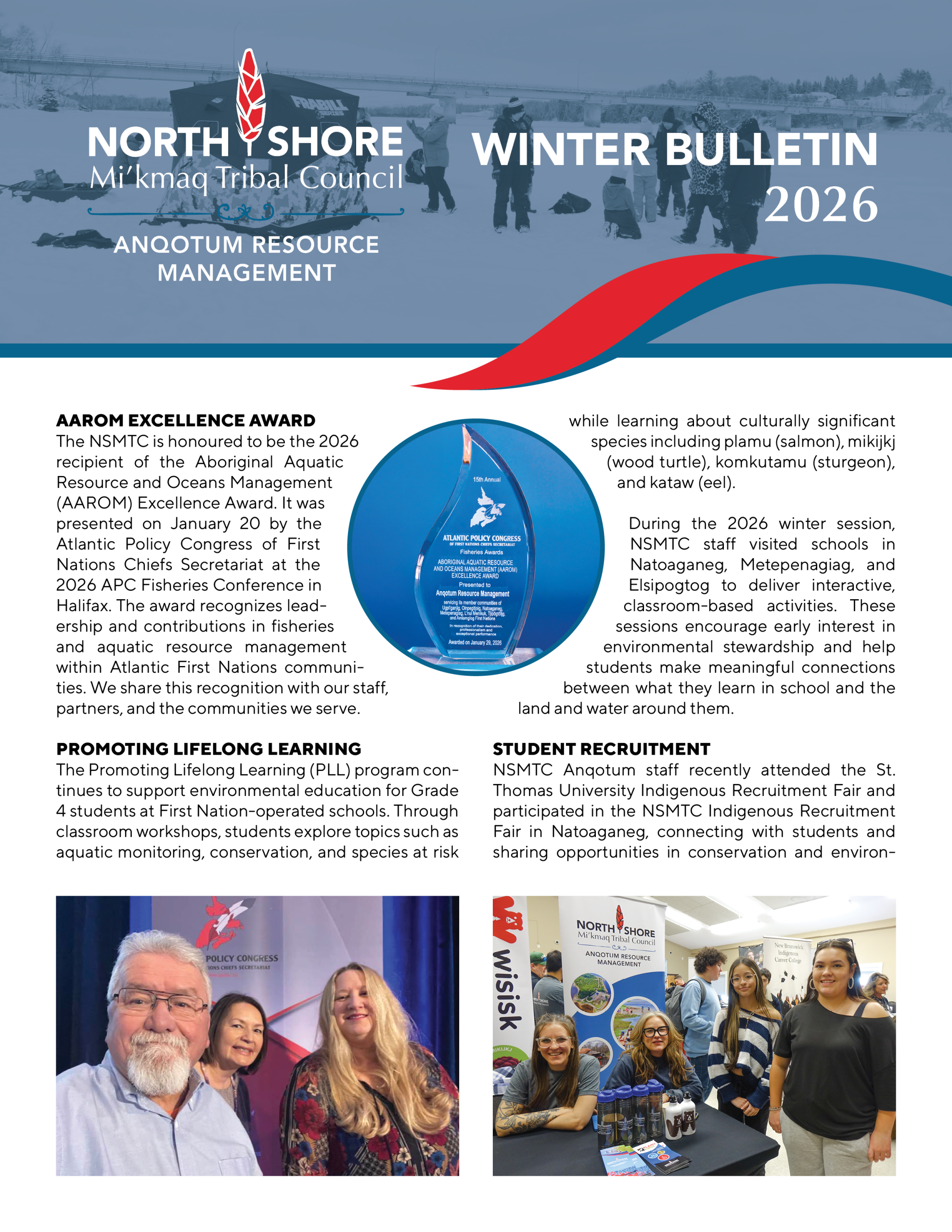
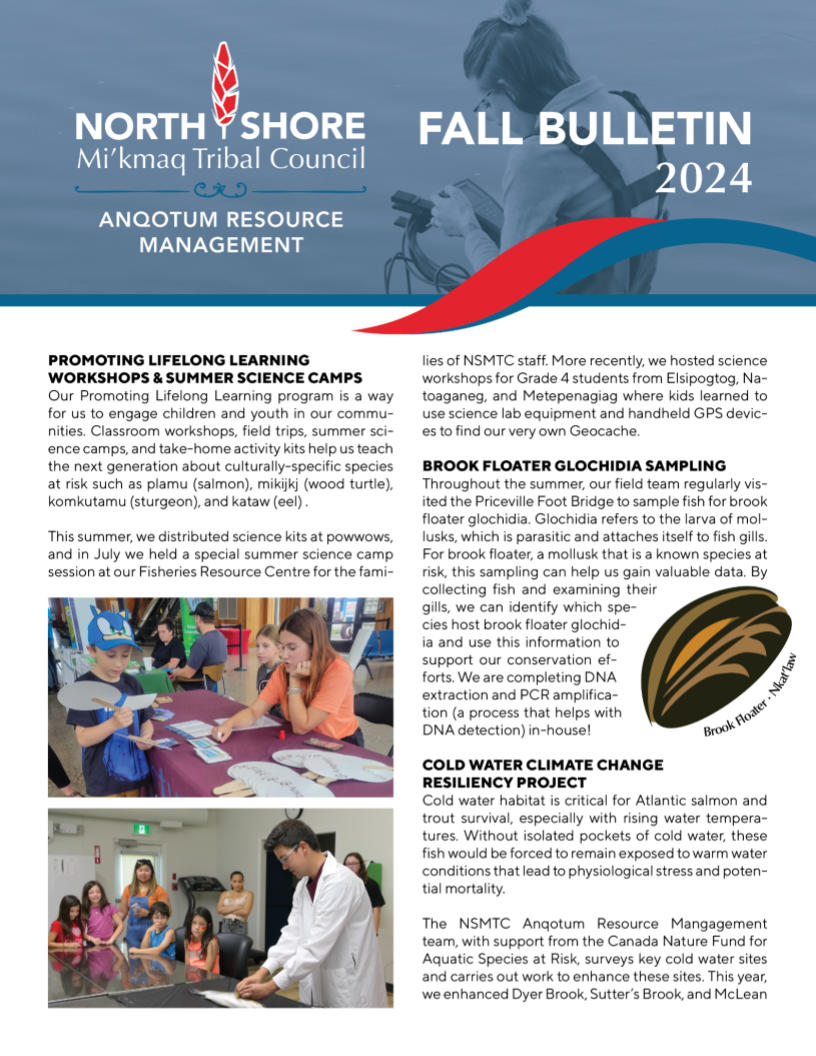
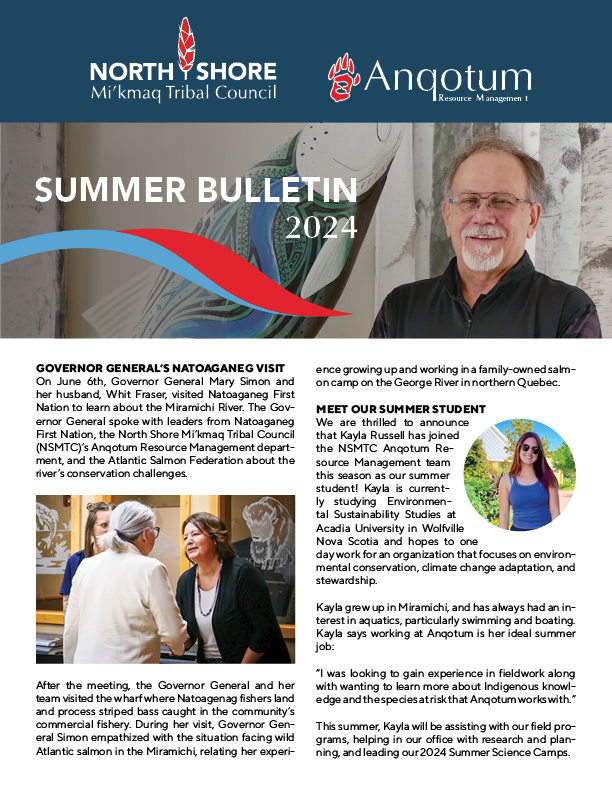
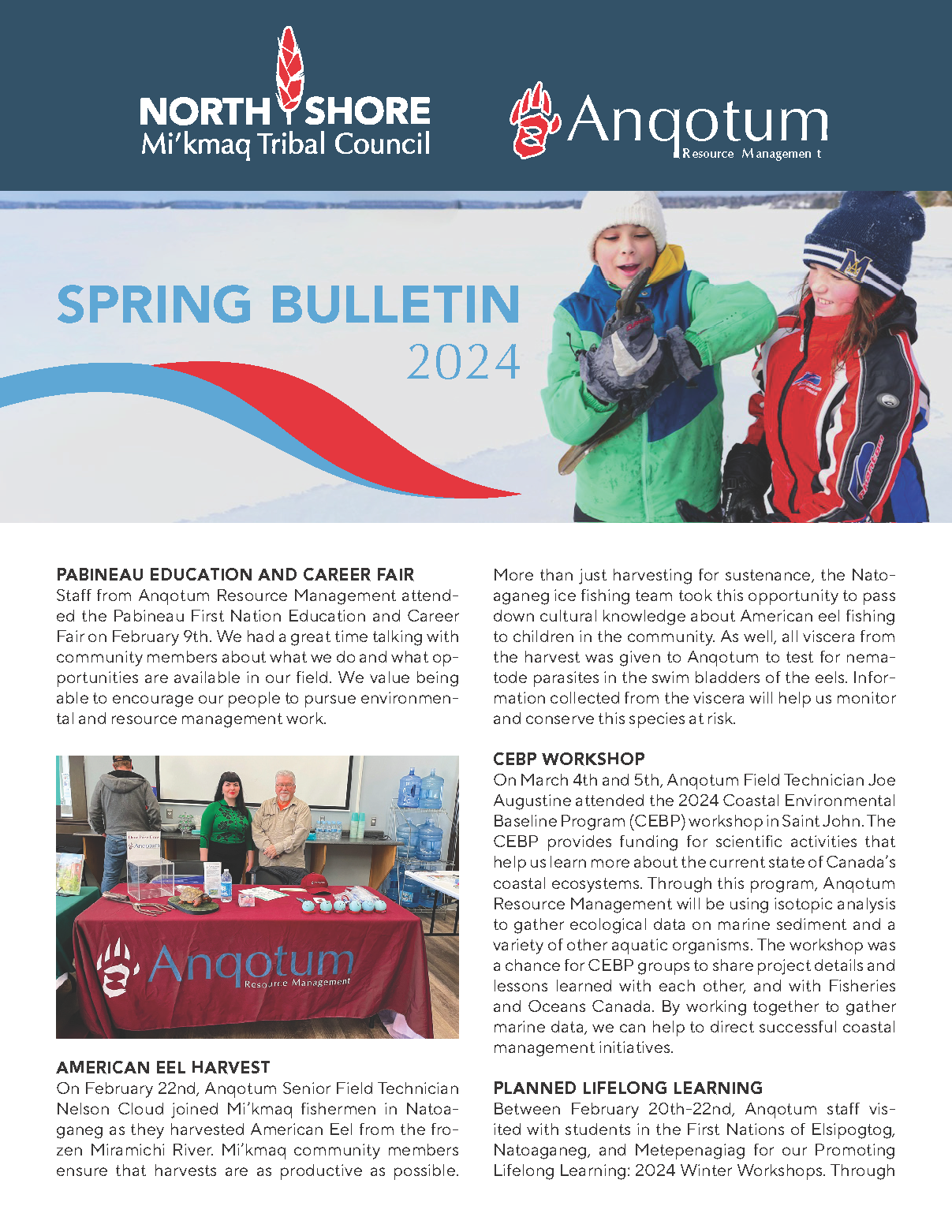
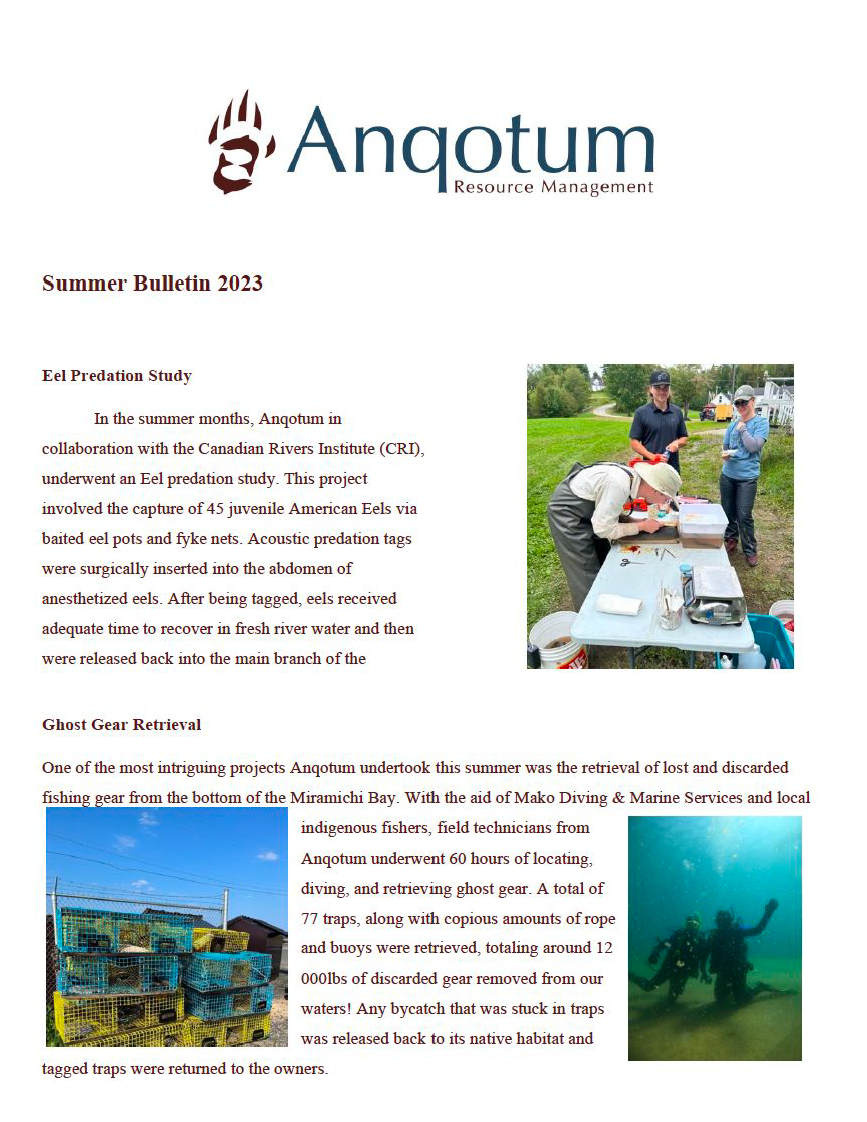
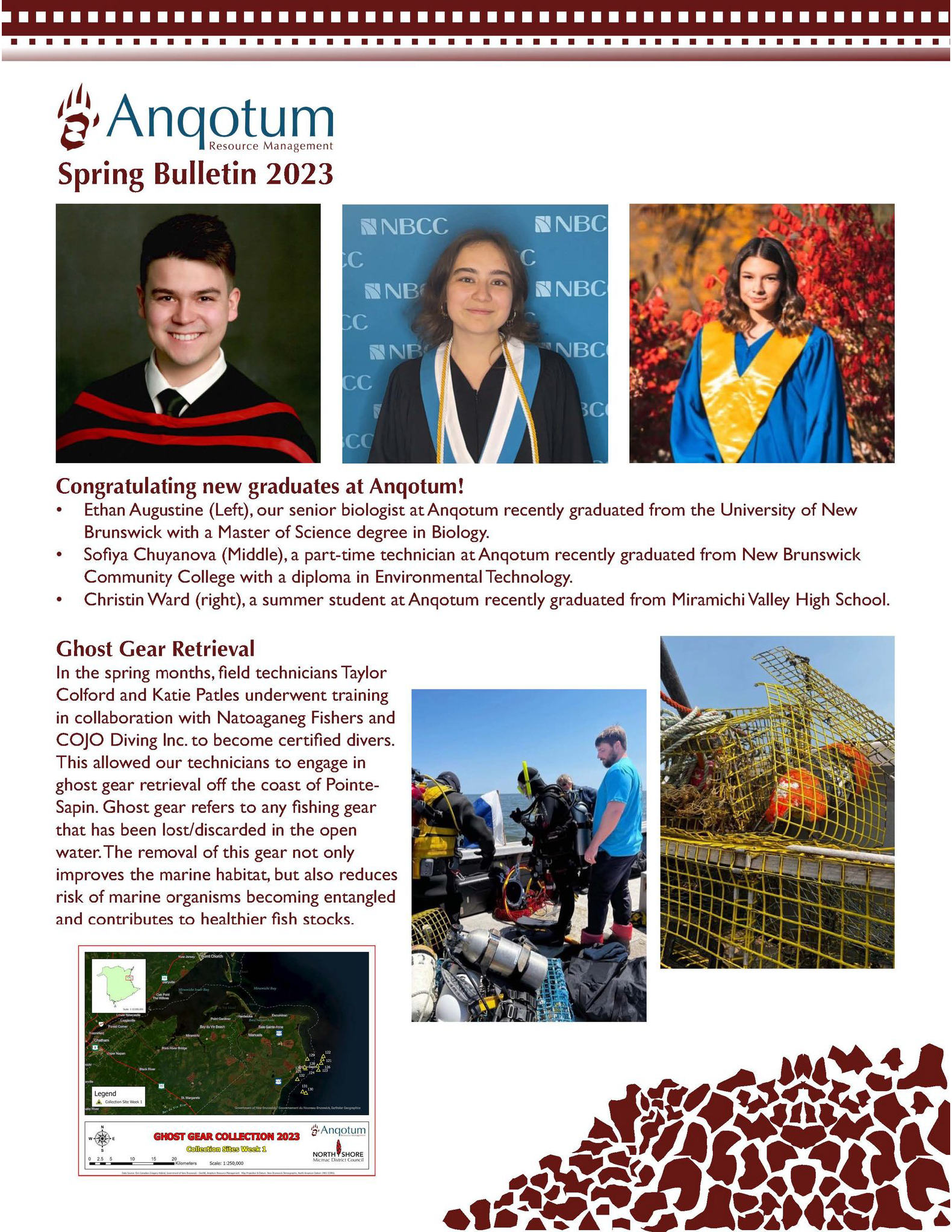
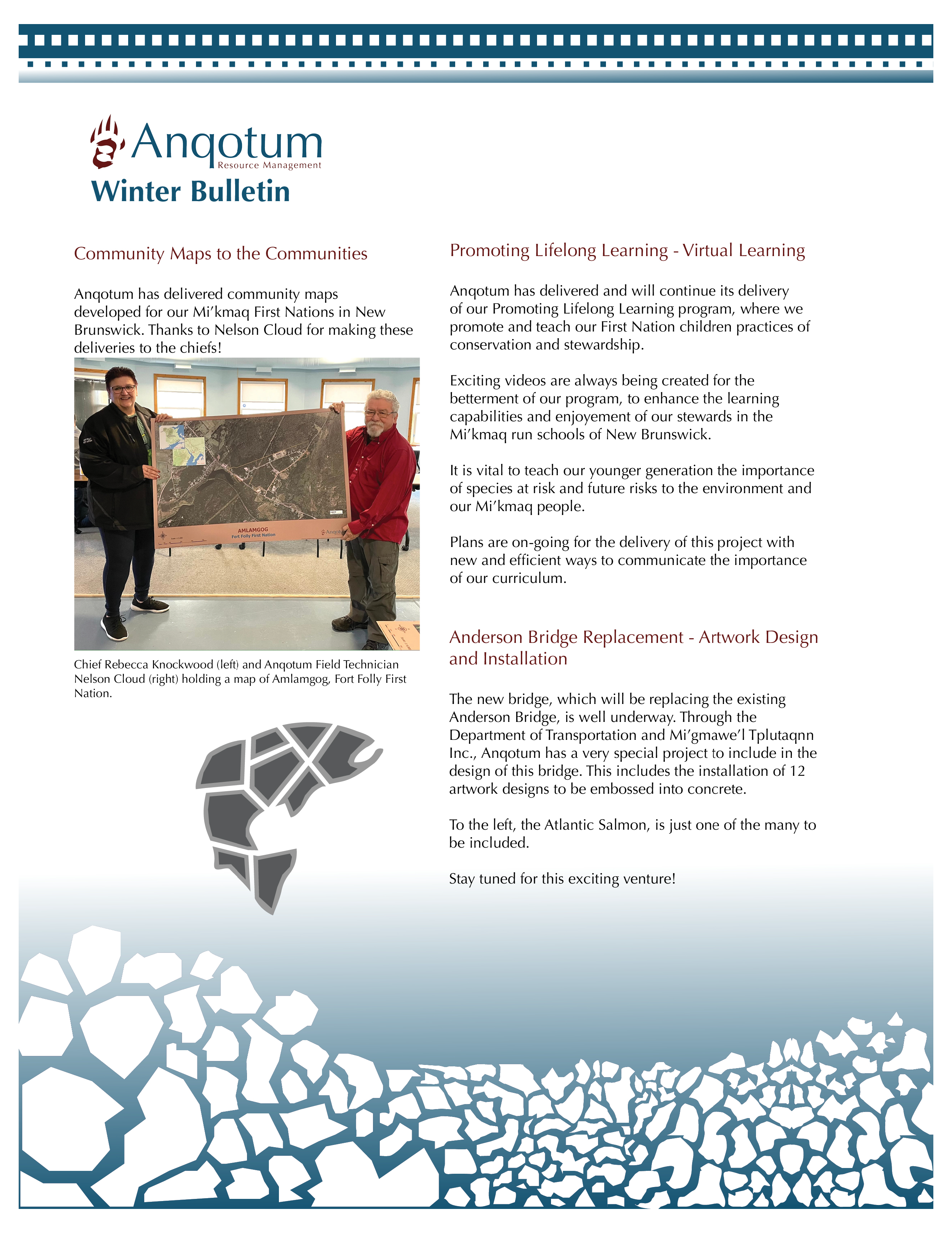
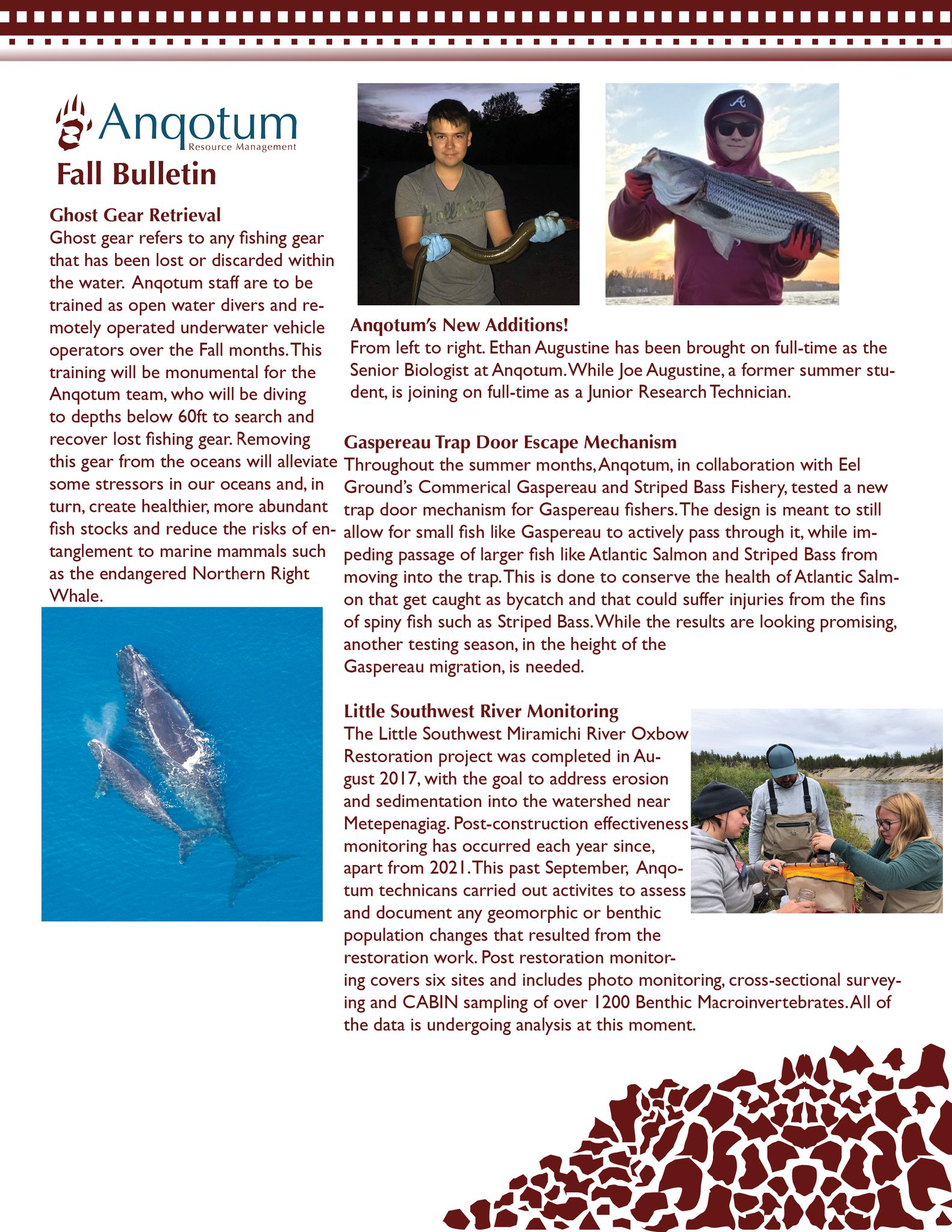
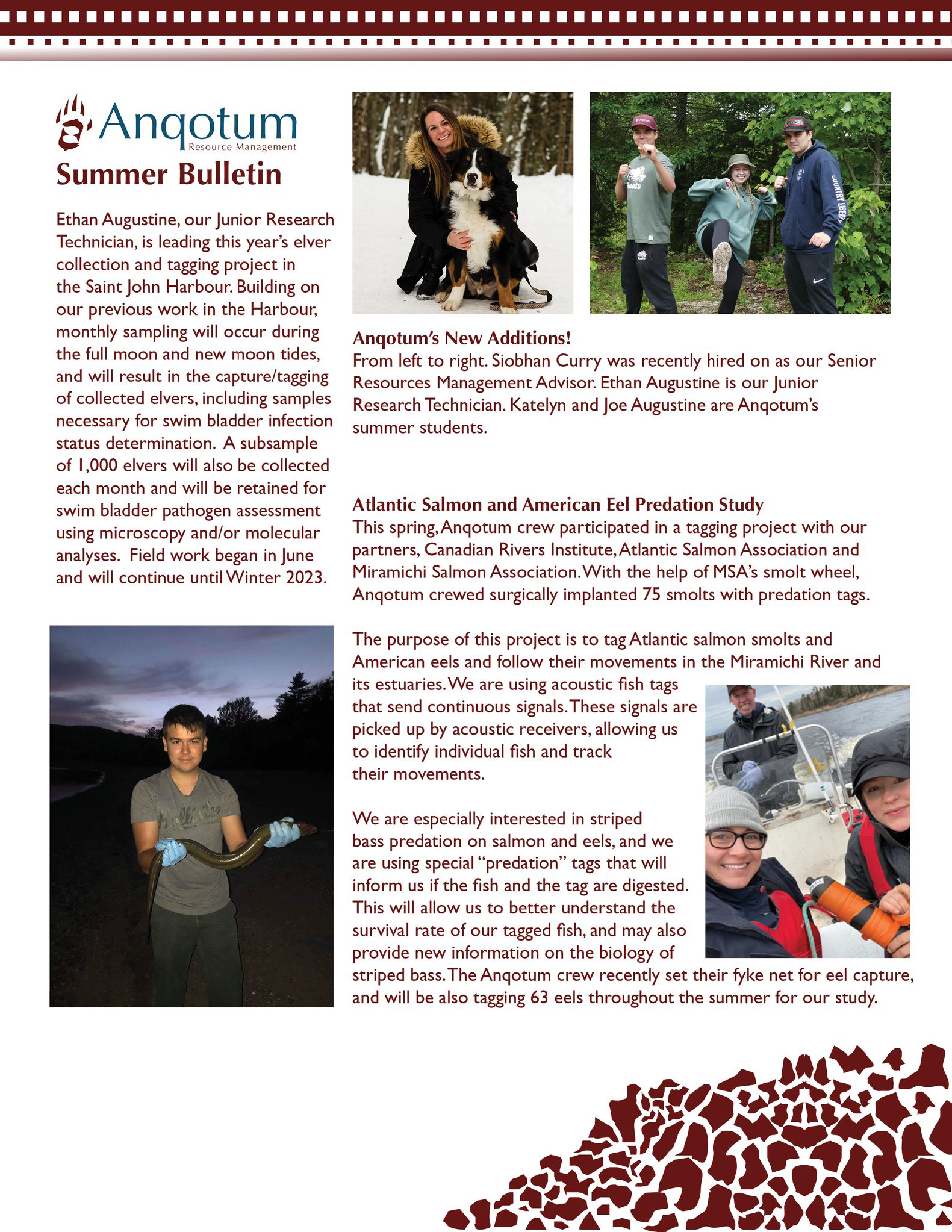
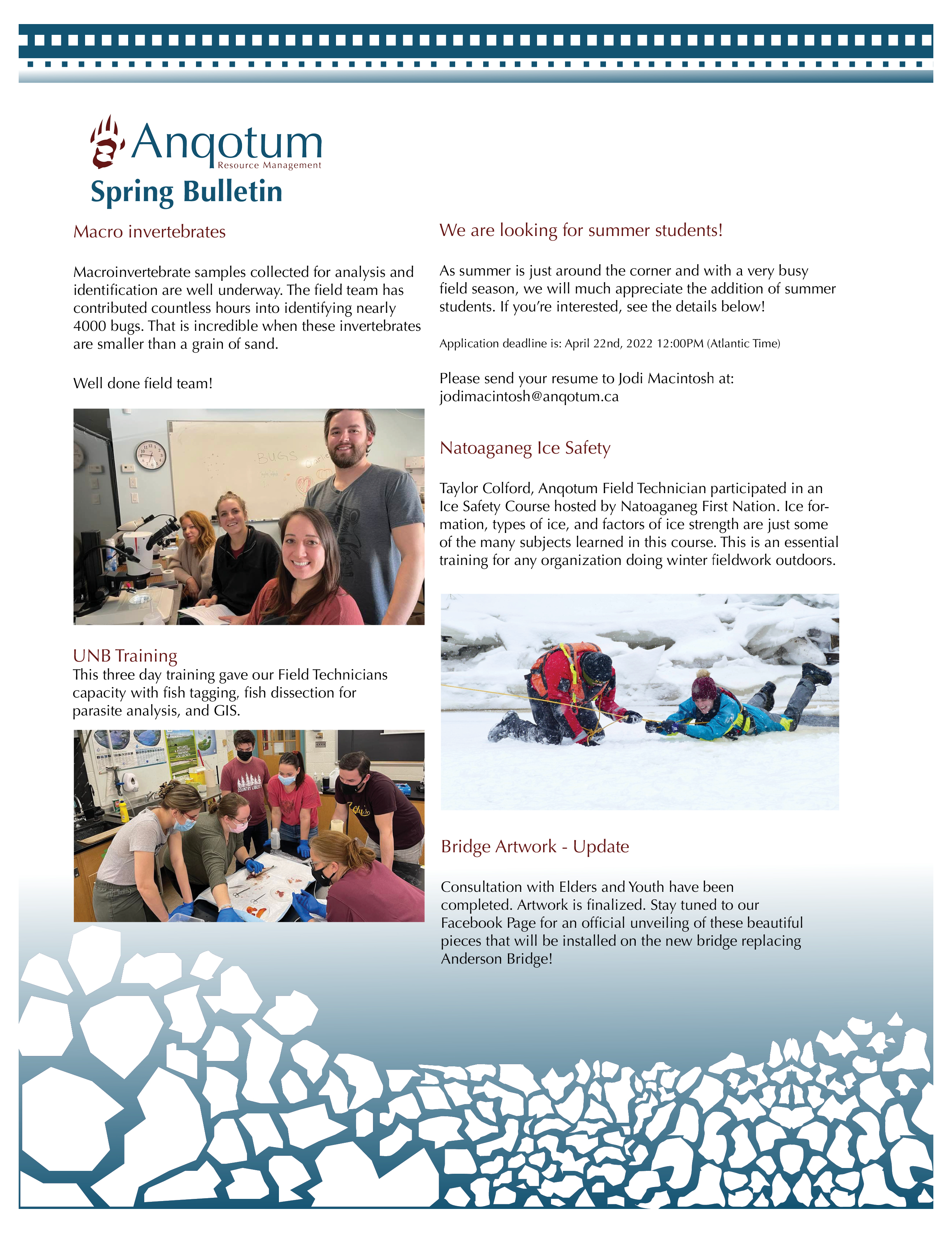
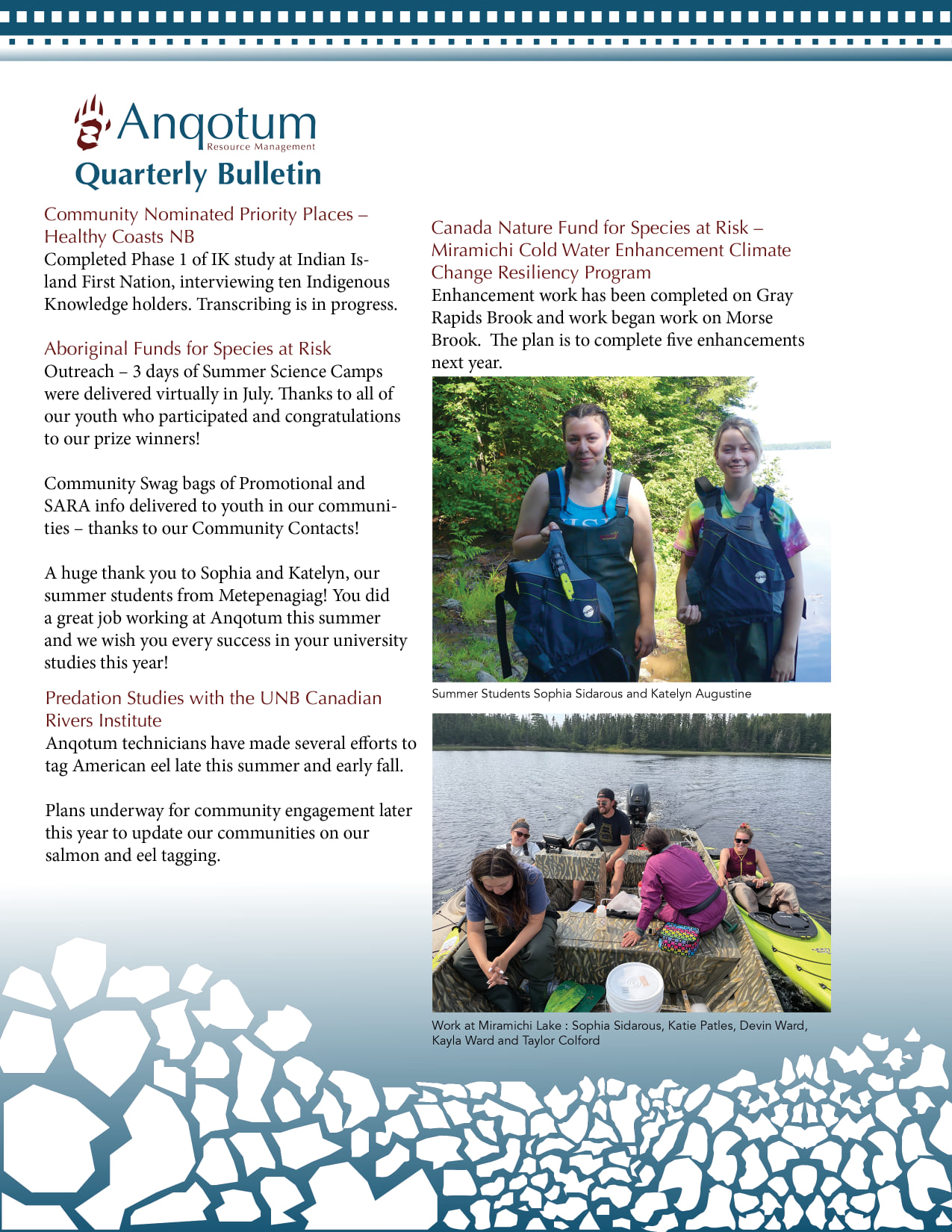
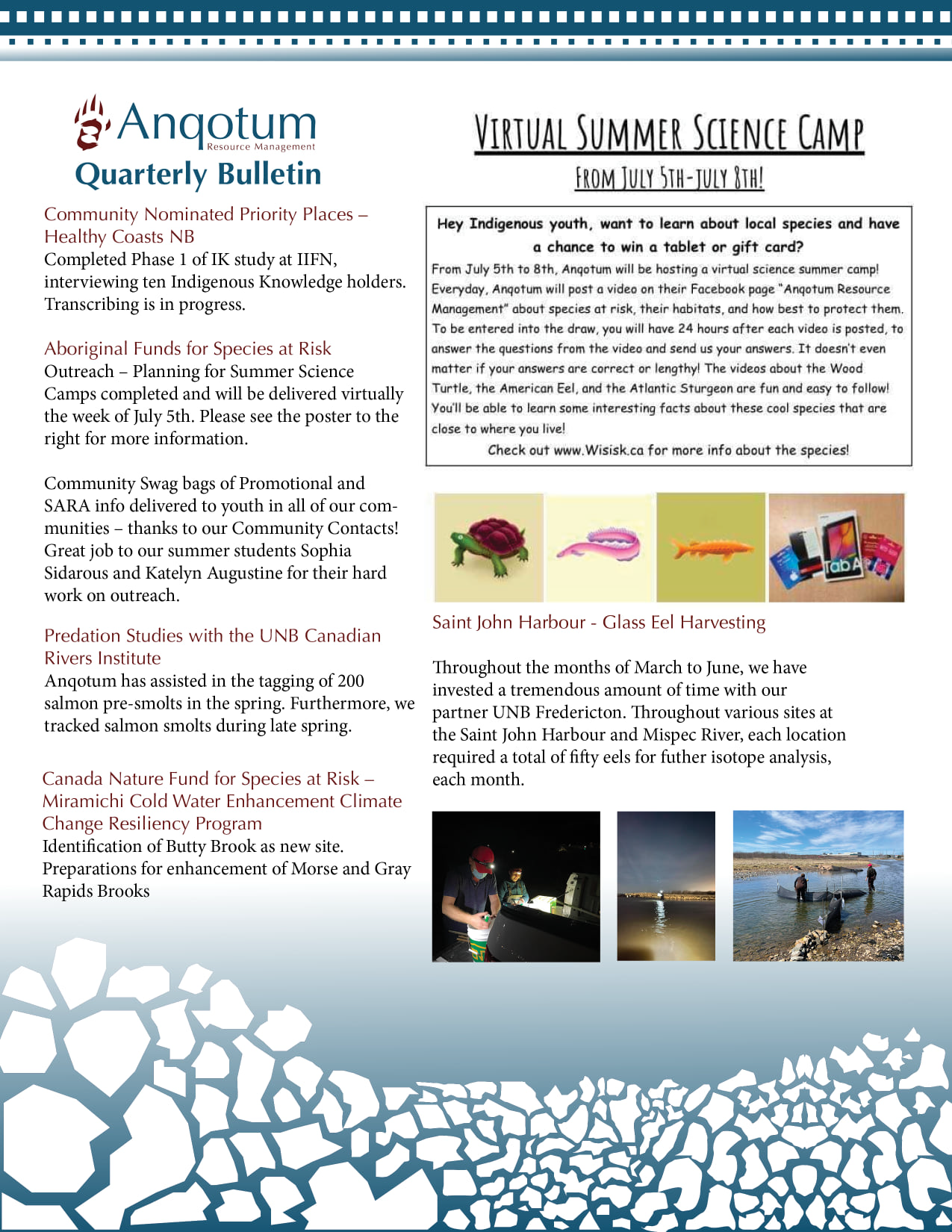
Newsletters
Learn More
Contact Us
Our Team

Jodi MacIntosh
Administration Manager
Pam Ryan
Environmental Services Manager
Austin Martin
Finance Officer
Ethan Augustine
Senior Biologist
Nelson Cloud
Senior Field Technician
Siobhan Curry
Senior Resource Advisor
Taylor Colford
Field Technician
Joe Augustine
Field Technician
Katie Patles
Field Technician